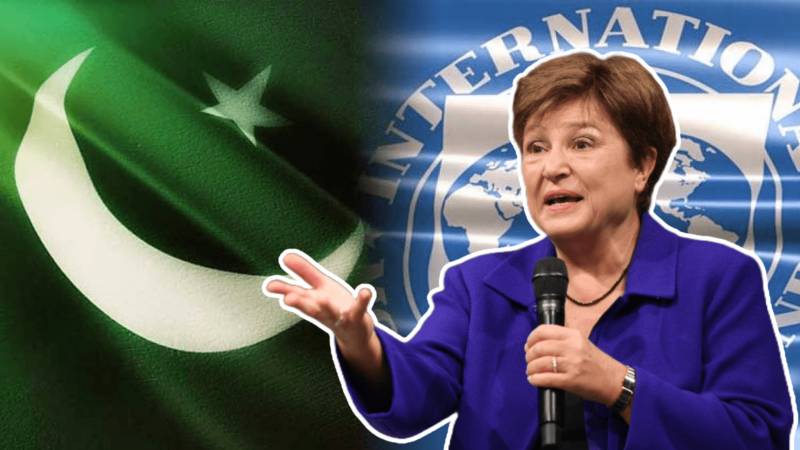
ISLAMABAD: On Wednesday, the International Monetary Fund (IMF) approved a new $7 billion bailout package for Pakistan, following the country’s commitment to revamp its agricultural income tax, transfer certain fiscal responsibilities to provincial governments, and limit subsidies.
The Prime Minister’s Office announced that the IMF Executive Board had greenlit a 37-month Extended Fund Facility worth $7 billion, authorizing an immediate disbursement of the first loan tranche of nearly $1.1 billion. This marks Pakistan’s 25th IMF program since 1958, and the sixth under the EFF.
Pakistan will incur around a 5% interest rate on this loan, as per a statement from the Ministry of Finance to the Senate Standing Committee on Economic Affairs.
Prime Minister Shehbaz Sharif reaffirmed that this would be Pakistan’s final IMF program, echoing a similar pledge made following the approval of the 24th IMF program in 2023.
Shehbaz credited the success of the new bailout to Deputy Prime Minister Ishaq Dar, Chief of Army Staff General Asim Munir, and the finance team. He emphasized that federal cooperation with all four provinces was essential to completing the 25th program in Pakistan’s history.
Interestingly, the Sindh government ratified the memorandum of understanding for the National Fiscal Pact on July 30, while Balochistan did so on July 26—after Pakistan’s staff-level agreement with the IMF on July 12.
However, the IMF program does not address a major root cause behind Pakistan’s recurring loans: the need to restructure external and domestic debt, which consumed 81% of the country’s tax revenue in the last fiscal year.
The new bailout aims to stabilize the economy by consolidating public finances, rebuilding foreign exchange reserves, reducing fiscal risks associated with state-owned enterprises, and enhancing the business climate to encourage private-sector-led growth.
To qualify for the bailout, Pakistan’s government introduced additional taxes of Rs1.4 trillion to Rs1.8 trillion, raised electricity prices by up to 51%, and committed to increasing transparency in the Sovereign Wealth Fund.
In a historic move, the government also took out its most expensive loan ever—$600 million—to secure a board meeting date with the IMF. Key conditions of the bailout include addressing fiscal viability in the power sector, privatizing loss-making entities, and increasing tax revenues.
Unlike past agreements, this program includes provincial budgets and revenues. Almost a dozen conditions directly impact provincial finances.
By next Tuesday, Pakistan’s federal and provincial governments will sign a new National Fiscal Pact, transferring responsibilities for health, education, social safety nets, and road infrastructure to the provinces, per IMF terms.
Provincial governments must also align their agricultural income tax rates with federal personal and corporate tax rates by October 30. This would raise agricultural income tax from 12-15% to 45% by January next year.
The provinces are barred from giving further electricity and gas subsidies and from establishing new Special Economic Zones or Export Processing Zones. The federal government, likewise, cannot open new economic zones and must phase out tax incentives for existing zones by 2035.
Additionally, Pakistan must show a primary budget surplus of 4.2% of GDP over the program period. This surplus is calculated excluding interest payments, which would significantly reduce non-interest expenditures and place an additional tax burden of 3% of GDP on existing taxpayers.
In the event of a tax shortfall, the government has agreed to introduce a mini-budget, increasing taxes on imports, contractors, professional services, and fertilizers. The FBR already faces a potential Rs200 billion tax shortfall in the first quarter.
Pakistan is also required to cap its spending on defense and subsidies at last fiscal year’s level relative to the size of the economy.
However, the program’s design does not fully address Pakistan’s debt sustainability, relying instead on rolling over maturing external debt during the program.
During this period, Pakistan will not repay $12.7 billion in debt owed to Saudi Arabia, China, the UAE, and Kuwait.
To qualify for the IMF approval, Pakistan was forced to bridge an additional $2 billion financing gap, taking out its most expensive commercial loan ever—11% interest from Standard Chartered Bank.
On Wednesday, the Asian Development Bank warned that rising political and institutional tensions could hinder the implementation of the reforms Pakistan has promised to the IMF. These reforms are critical to ensuring continued external financing for the country.